Views: 6 Author: Site Editor Publish Time: 2026-01-23 Origin: Site


In many industries that handle steel and ferromagnetic materials, lifting and transporting heavy metal components remains a major operational challenge. Traditional lifting methods such as slings, hooks, or clamps often require manual binding, precise positioning, and multiple operators, which not only slows down operations but also increases labor costs and safety risks. This is where magnetic lifters offer a highly efficient and reliable solution.
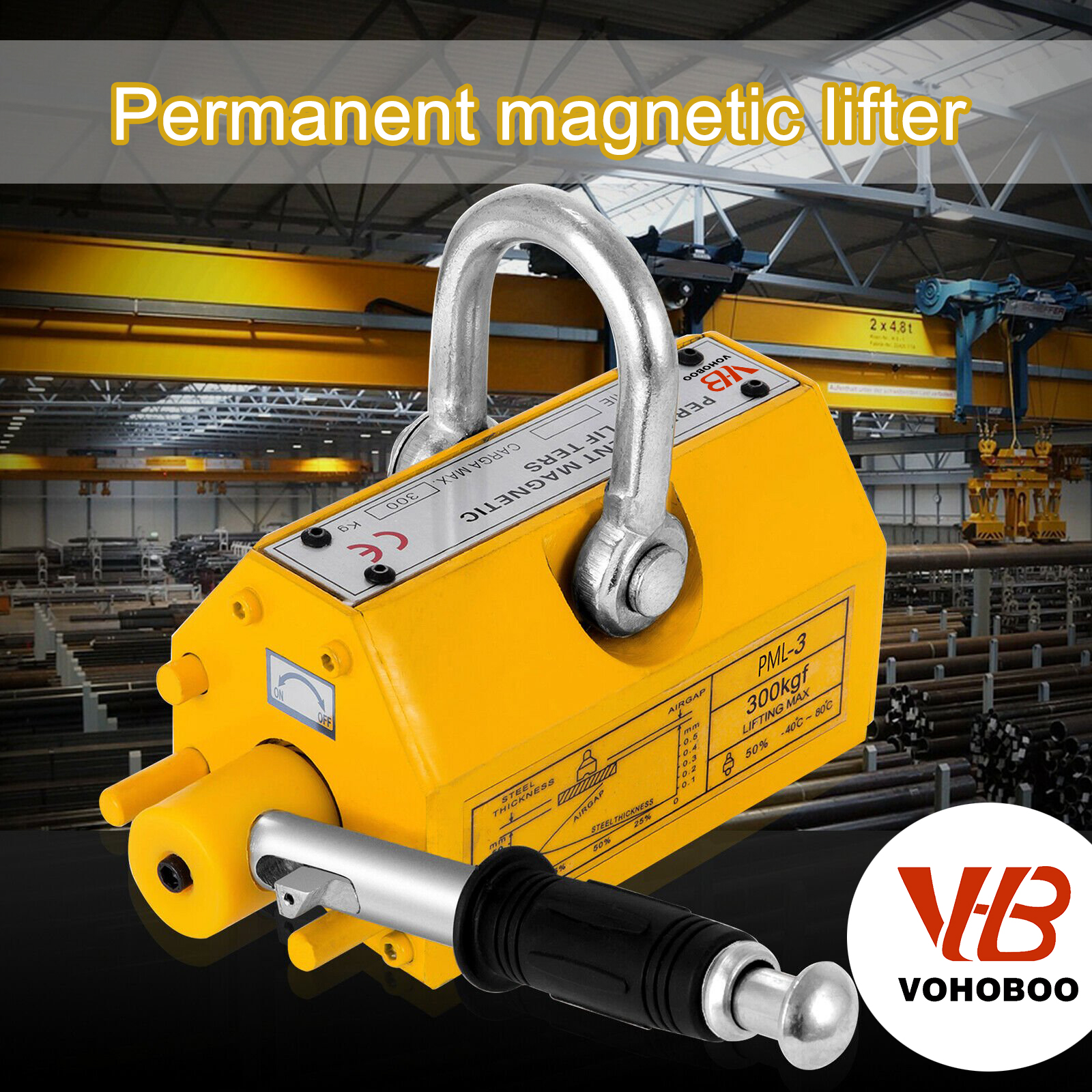
Magnetic lifters, also known as magnetic lifting devices or magnetic chucks, are lifting attachments that use magnetic force to safely handle ferromagnetic materials such as steel plates, billets, pipes, beams, and machined components. They are widely used in combination with overhead cranes, gantry cranes, jib cranes, and electric hoists to improve material handling efficiency and workplace safety.
A magnetic lifter works by generating a strong magnetic field that securely attracts and holds ferromagnetic materials during lifting and transportation. When the lifter makes full contact with the load, the magnetic force penetrates the material and creates a stable holding force, allowing the load to be lifted without the need for slings, chains, or mechanical clamps.
Magnetic lifters are generally divided into two main types: electromagnetic lifters and permanent magnetic lifters. Electromagnetic lifters rely on electrical power to generate magnetism, while permanent magnetic lifters use an internal magnetic circuit that can be activated or deactivated mechanically without continuous power supply. Both types are designed to simplify lifting operations and reduce dependence on manual handling.
One of the most common challenges faced by customers is low handling efficiency. Traditional lifting methods require workers to manually attach slings or chains, adjust balance, and secure loads before each lift. This process is time-consuming and significantly reduces productivity, especially in high-frequency loading and unloading operations.
Safety is another major concern. Manual binding increases the risk of accidents, including hand injuries, falling loads, and unstable lifting caused by improper sling positioning. In busy workshops and steel warehouses, these risks directly impact worker safety and operational continuity.
Surface damage is also a frequent issue. Mechanical clamps and slings can leave marks, scratches, or deformation on steel plates and finished components. For customers handling high-value materials or precision-machined parts, surface damage leads to rework, rejection, and increased costs.
In addition, rising labor costs make manual-intensive lifting methods less attractive. Many companies are actively looking for solutions that reduce manpower requirements while maintaining or improving safety and efficiency.
Magnetic lifters directly address these challenges by eliminating the need for manual binding. Operators can attach the lifter to the load within seconds, dramatically reducing preparation time and improving overall workflow efficiency. This is especially valuable in steel plate handling, cutting centers, and machining workshops where speed and repeatability are critical.
From a safety perspective, magnetic lifters reduce direct contact between workers and heavy loads. Once the lifter is engaged, the operator can maintain a safe distance during lifting and transportation. High-quality magnetic lifters are designed with safety factors, residual magnetism control, and anti-drop protection to ensure stable operation under normal working conditions.
Magnetic lifting also minimizes surface damage. Since the lifting force is distributed across the contact area, there is no mechanical squeezing or point loading on the material. This makes magnetic lifters ideal for handling finished or semi-finished products where surface quality matters.
By simplifying operations, magnetic lifters help reduce labor dependency. In many applications, a single operator can safely complete lifting tasks that previously required multiple workers, resulting in lower labor costs and improved operational efficiency.
Magnetic lifters are widely used in steel mills and steel service centers for handling steel plates, slabs, and billets. In these environments, fast and repetitive lifting is essential, and magnetic lifters provide a clear advantage over traditional methods.
In manufacturing and metal processing workshops, magnetic lifters are commonly used to move raw materials, machined components, and welded assemblies. Their ability to handle flat and uniform loads makes them particularly suitable for CNC machining centers and fabrication lines.
The shipbuilding and heavy equipment manufacturing industries also benefit from magnetic lifters, especially when handling large steel plates and structural components during assembly and welding processes.
In warehouses and logistics facilities, magnetic lifters are used for loading and unloading metal materials from trucks and storage racks, significantly reducing handling time and improving turnover efficiency.
Scrap handling and recycling operations rely heavily on magnetic lifters to collect, sort, and transport ferrous materials efficiently, even in irregular shapes and mixed conditions.
While magnetic lifters offer many advantages, proper selection and usage are essential for safe operation. The load must be made of ferromagnetic material, and the surface should be relatively clean and flat to ensure sufficient contact and magnetic force.
Load thickness, size, and weight must be carefully evaluated. Thin plates or small components may require specialized magnetic lifters or reduced load ratings to maintain safety. The rated lifting capacity of the magnetic lifter should always exceed the actual load weight, including a suitable safety margin.
Environmental conditions such as temperature, moisture, and surface coatings can also affect magnetic performance and should be considered during selection.
Magnetic lifters provide a powerful solution to many of the challenges faced in metal material handling. By improving efficiency, enhancing safety, reducing labor costs, and protecting material surfaces, they have become an essential lifting accessory in modern industrial operations.
For companies looking to optimize lifting processes and improve productivity without complex mechanical systems, magnetic lifters offer a practical, reliable, and cost-effective choice.

| | Tel: +86-27-86790925 |
| | Mobile: +86 13720388778 |
| | E-mail: info@vohoboo.com |
| |