Views: 1 Author: Site Editor Publish Time: 2026-09-01 Origin: Site


Multi-Span Suspension Crane: A Flexible Material Handling Solution for Complex Workshops

As industrial production continues to develop toward automation, intensive operation, and flexible manufacturing, companies are demanding more from their in-plant material handling systems. In workshops with complex column layouts, long working areas, or limited floor space, traditional lifting equipment may struggle to provide sufficient coverage, efficient space utilization, and smooth operation.

With its flexible runway arrangement and excellent adaptability, the multi-span suspension crane has become an effective material handling solution for manufacturing workshops, assembly lines, warehouses, and maintenance areas.

What Is a Multi-Span Suspension Crane?

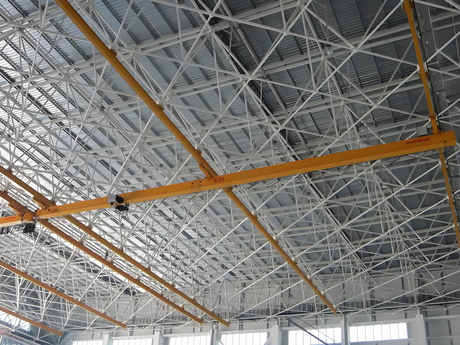
A multi-span suspension crane is an overhead lifting system with runways installed beneath the roof structure, supporting beams, or specially designed load-bearing structures of a building.

Compared with a conventional overhead bridge crane, a suspension crane usually does not require additional floor-mounted runway columns. This helps reduce interference with production areas and allows more efficient use of the available floor space.

When the working area is wide, the building has multiple supporting points, or a single-span system cannot provide sufficient coverage, a multi-span design can distribute loads across several suspension points and extend the crane’s operating range.

The system can be configured according to the building structure, lifting route, rated capacity, lifting height, and operating frequency, allowing materials to move smoothly between different workstations.

Main Advantages of a Multi-Span Suspension Crane

1. Improved Space Utilization

The crane runways are installed beneath the building structure, reducing the need for floor-mounted columns and supporting structures.

This arrangement leaves more space available for production lines, forklifts, workers, and other equipment. It is particularly suitable for workshops where floor space must remain clear and accessible.

2. Adaptability to Complex Building Structures

For buildings with large working areas, irregular column spacing, or multiple supporting points, the multi-span suspension crane can be designed according to the actual structural conditions.

By arranging the suspension points and runways properly, the system can provide wider working coverage while meeting the required load-bearing conditions.

3. Flexible Material Transfer

A multi-span suspension crane can serve several production areas or workstations. It is suitable for lifting and transferring molds, machine components, semi-finished products, maintenance equipment, and other industrial materials.

Depending on the application, the system can be equipped with an electric chain hoist, electric wire rope hoist, manual hoist, or powered travelling mechanism to meet different operating requirements.

4. Modular and Expandable Design

Depending on the project requirements, the crane system can adopt a modular design. This makes it easier to adjust the runway length, extend the working area, or modify the workstation layout in the future.

This flexibility is especially valuable for production line upgrades, workshop renovations, and capacity expansion projects.

5. Improved Operational Safety and Efficiency

A properly planned lifting route can reduce manual handling and minimize interaction between forklifts, workers, and materials.

The crane can also be equipped with lifting limit switches, travel limit switches, overload protection, emergency stop devices, and other safety features to improve operational stability and safety.

Typical Applications

Multi-span suspension cranes can be used in machinery manufacturing, automotive component assembly, metal processing, warehousing, equipment maintenance, and production line material handling.

They are particularly suitable for the following conditions:

1. Floor-mounted runway columns cannot be installed in the workshop;
2. Multiple production workstations need to be covered;
3. The building has a complex column or roof structure;
4. Forklift transport and manual handling need to be reduced;
5. An existing workshop requires a lifting system upgrade;
6. Efficient space utilization and flexible lifting routes are required.

What Should Be Considered During Project Design?

A multi-span suspension crane is not simply a crane with an extended runway. It is a complete lifting system that must be designed according to the building structure and actual operating conditions.

Before developing the solution, the following information should normally be confirmed:

1. Rated lifting capacity and typical load weight;
2. Workshop length, width, clear height, and column spacing;
3. Roof structure, supporting beams, and load-bearing conditions;
4. Required runway layout and working coverage;
5. Lifting height, travelling distance, and operating frequency;
6. Power supply, control method, and working environment;
7. Applicable local safety standards and inspection requirements.

The load-bearing capacity of the building is one of the most important factors in evaluating project feasibility.

Before installation, qualified engineers should assess the building structure, loads at each suspension point, and connection methods to ensure that the crane system is compatible with the supporting structure.

Customized Design for Specific Material Handling Requirements

Every factory has different building conditions, production processes, and lifting requirements. Therefore, a multi-span suspension crane usually needs to be customized according to the actual project site.

A suitable design should consider not only the lifting capacity but also the travelling route, workstation connections, maintenance space, operating habits, and future expansion requirements.

Through detailed communication, structural assessment, and solution optimization, companies can establish a smoother material handling process, reduce unnecessary transfers, improve workshop space utilization, and reserve flexibility for future production line adjustments.

If you are planning a lifting system for a new facility or upgrading the material handling system in an existing workshop, please provide Vohoboo with your workshop drawings, required lifting capacity, lifting height, and working coverage.

Based on your actual operating conditions, our team can help develop a customized multi-span suspension crane solution for your project.

| | Tel: +86-27-86790925 |
| | Mobile: +86 13720388778 |
| | E-mail: info@vohoboo.com |
| |