

Views: 3 Author: Site Editor Publish Time: 2026-01-09 Origin: Site


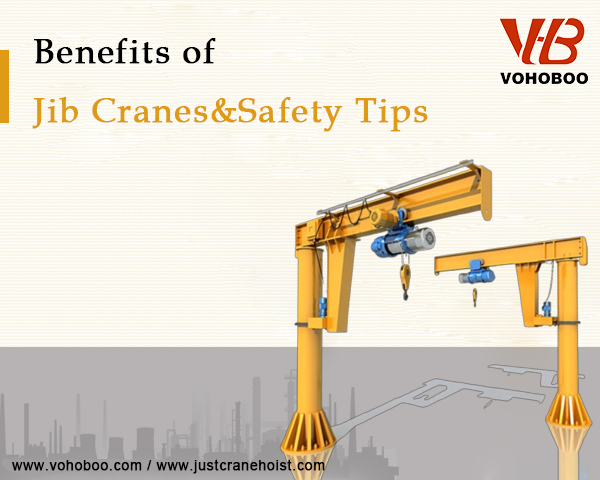
Jib cranes are one of the most practical and widely used lifting solutions in modern industrial environments. Known for their simple structure, flexible rotation, and high efficiency, jib cranes are commonly found in workshops, warehouses, production lines, maintenance areas, and loading stations. Compared with large overhead cranes, jib cranes offer a cost-effective and space-saving solution for localized material handling tasks.
Understanding the benefits of jib cranes, as well as the essential safety considerations during their operation, helps companies improve productivity while maintaining a safe working environment.
One of the primary advantages of jib cranes is their ability to provide efficient lifting within a defined work area. A jib crane typically consists of a vertical mast or wall-mounted support, a horizontal jib arm, and a hoist that travels along the arm. This design allows the crane to rotate and cover a circular or semi-circular working range, making it ideal for point-to-point material handling.
Jib cranes significantly improve workflow efficiency by reducing the need for manual lifting or forklift movement. Operators can quickly lift, move, and position loads with precision, minimizing downtime between tasks. This is particularly valuable in assembly lines and maintenance stations where repetitive lifting is required.
Another major benefit is space efficiency. Jib cranes can be installed in areas where overhead cranes are not feasible, such as low-ceiling workshops or locations with limited structural support. Wall-mounted jib cranes use existing building columns, while floor-mounted jib cranes require minimal foundation space, making them adaptable to both new and existing facilities.
Cost-effectiveness is another important advantage. Compared with overhead or gantry cranes, jib cranes generally have lower initial investment costs, simpler installation requirements, and reduced maintenance expenses. For companies that need localized lifting rather than full-coverage crane systems, jib cranes provide excellent value for money.
Flexibility is also a key reason why jib cranes are widely used. They can be equipped with electric chain hoists or wire rope hoists, and configured as fixed, manual rotation, or motorized rotation types. This allows businesses to tailor the crane to their specific load capacity, working frequency, and operational preferences.
From an ergonomic perspective, jib cranes help reduce physical strain on workers. By handling lifting and positioning tasks mechanically, they minimize the risk of musculoskeletal injuries caused by manual handling. This not only protects workers but also improves overall productivity and job satisfaction.
Jib cranes are commonly used in manufacturing workshops for loading and unloading machine tools, handling components during assembly, and transferring materials between workstations. In warehouses and logistics centers, they assist with pallet handling, packaging, and loading operations. Maintenance departments rely on jib cranes to lift motors, gearboxes, and spare parts efficiently, while outdoor jib cranes are often used at docks, yards, and construction sites for localized lifting tasks.
Because jib cranes operate within a defined area, they are often used as a complementary lifting solution alongside overhead cranes. While an overhead crane handles long-distance transportation, jib cranes manage precise, repetitive lifting at specific workstations.
While jib cranes are relatively simple and safe lifting devices, proper operation and maintenance are critical to preventing accidents and equipment damage. One of the most important safety considerations is ensuring that the crane is correctly selected for the application. The rated load capacity of the jib crane must always exceed the maximum load being lifted, including the weight of the hoist and lifting accessories.
Proper installation is equally important. The foundation, wall, or column supporting the jib crane must have sufficient strength to withstand the loads and rotational forces generated during operation. Incorrect installation can lead to structural failure, instability, or premature wear.
Operator training plays a vital role in safe crane use. Operators should be familiar with the crane’s controls, load limits, and emergency stop functions. They should understand how to lift loads smoothly, avoid sudden movements, and prevent load swinging. Unauthorized or untrained personnel should never be allowed to operate the crane.
Routine inspection and maintenance are essential for long-term safety. Key components such as the hoist, wire rope or chain, limit switches, brakes, and electrical systems should be inspected regularly. Any signs of abnormal noise, excessive wear, deformation, or malfunction should be addressed immediately before further operation.
Load handling practices also directly affect safety. Loads should always be lifted vertically and centered under the hook to avoid side loading, which can damage the jib arm or hoist. Operators should never exceed the rated load or use the crane to drag or pull loads horizontally. Keeping the work area clear of obstacles and personnel during lifting operations further reduces risk.
Environmental factors should not be overlooked. In outdoor or harsh environments, corrosion protection, weather-resistant electrical components, and proper lubrication are necessary to maintain safe operation. In dusty or high-temperature environments, appropriate protective measures help prevent premature component failure.
Jib cranes offer a highly efficient, flexible, and cost-effective solution for localized lifting tasks across a wide range of industries. Their compact design, ease of installation, and ability to improve workflow efficiency make them an excellent choice for workshops, warehouses, and production facilities. When combined with proper selection, professional installation, operator training, and regular maintenance, jib cranes provide a safe and reliable lifting solution that enhances productivity while protecting workers and equipment.
By understanding both the benefits and the safety considerations of jib cranes, businesses can maximize the value of their lifting equipment and create a safer, more efficient working environment.

| | Tel: +86-27-86790925 |
| | Mobile: +86 13720388778 |
| | E-mail: info@vohoboo.com |
| |


